Wednesday, April 9, 2014

Maleficent: An Afterword

"A good book shouldn’t make you comfortable. It should make you edgy.” – Christine Emmert

Maleficent: An Afterword
by Stant Litore 

The greatest monsters—and the most beautiful angels—are those within us. Christine Emmert understands this, and she reminds us of it with wonder and terror. —No, “reminds us” is such a calm, rational way of putting it. That is not what Emmert’s stories do. Her tales are neither calm nor rational. They fall upon us with a shock, the way her wyvern in The Nun’s Dragon tears a hole in the sky and drops from the stars to earth, or the way Lilith dives shrieking from the dark air, talons extended, to clutch up baby mice or baby people. Emmert doesn’t remind us of anything. She compels us not to forget, compels us to look around at our world and at each other with wide-opened eyes.
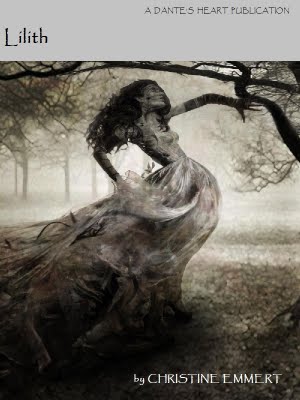
LilithThe narrator of Lilith tells us of her marriage to her husband: “Our own wedding vows baffled him when I asked to be shackled to his naked beating heart in the anger of winter.” To read a Christine Emmert story is to receive a communication that is a little bit like that vow. Her fiction is wind and dark wine; she draws us into scenes that are as finely and precisely crafted as gardens, scenes that seem as carefully static and controlled as gardens, or as medieval paintings. But then she stands behind us, whispering the incantation of her story in our ear as we look on, and suddenly thorns and briars tear their way through soil or canvas and rear up dark all around us, as though she is Maleficent. Then we move forward into the darker and more beautiful heart of the story—a story we’d thought for a moment was just a pretty garden!—and the thorns cut us as we go in, and we bleed.

Her prose is beautiful, but it is not for everyone. There is an archaism to it that can prove either seductive or off-putting—as though Emmert is standing at the very brink of language, with a chasm of howling dark behind her, and before her the plateau of our modern language and our modern thinking, with its convenient sentences and figures of speech and comfortable ways of saying and hearing comfortable and familiar things—as though these comforts are a stand of poplars shielding our plateau from reality’s wind. She comes against our poplars with blades fashioned from images and from fragments she has taken from ancient ways of speaking, ways that we can no longer use but whose edges still cut. Then, the poplars down, she lets in the wind. She lets in the cold.

With our hair and our garments streaming behind us, we look out at a landscape transformed by the storm, by the sudden onset: nothing is as it was. Nothing is as we expect. We stride through the remains of our poplars, our familiarities, and in doing this we meet our world again as if for the first time, raw and rough with all of its potential—all of its horror and all of its wonder—laid bare. No comfortable refuge to protect us, no walls mortared with the hard bricks of our expectations.
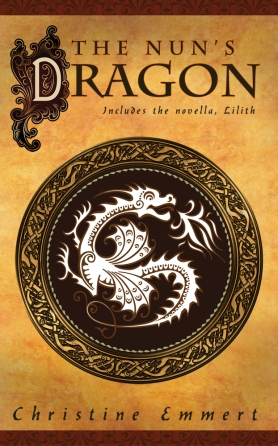
NunsDragon_Final_LilithWe might meet anyone in this wind, among these fallen trees: maiden or dragon or dark shadow. And they will not be who we expect, and we, the readers, will not be who we’ve thought we are. We might glance up and see stars again, stars bright and burning, stars we have forgotten. Or we might glance down and see blood we have spilled, blood we have forgotten. But in either case, we will not be permitted to just stroll quietly, blindly, in the shade of our poplars.

When you first step up to the medieval painting that a Christine Emmert story appears at first to be, you might think you are strolling in the shade of poplars. But you are not. Because the moment you are in, those poplars will be torn aside, and you will be in the thorn thicket. Emmert is Maleficent, not William Wordsworth. But, turning one page to the next, you must ask: what unsuspected beauty sleeps behind these thorns, waiting for you—you who are sleeping—to wake?

Stant Litore

January 13, 2014

Tuesday, March 4, 2014

The Nun's Dragon (New from Dante's Heart!)

"A glance showed her the wide night sky behind the dragon, with its millions of sharp yet irreplaceable stars. The moon hung like a jewel. All that open sky, all that darkness in which to hide or fly. Reared against it in all his power and beauty was her dragon. For a moment, it seemed inconceivable to her that the convent had held her in, had been shut around her, when the whole universe was so open and full of starlight."

- The Nun's Dragon. On sale for $0.99
http://www.amazon.com/dp/B00HV533CE

“An utterly enchanting and engrossing tale of the medieval heart.”- Novelist Stephanie Cowell
About “Lilith,” included in the volume: “As a mom, it truly freaked me out. Even though my child is seven, and isn’t in danger of being scooped up by a barn owl any time soon. While reading this book, my daughter was learning about eagles and owls in school and would run up and down the halls screeching and pretending to swoop down and snatch her prey. Freaky.”- The Eclectic Bookworm 
“‘The Nun’s Dragon’ begins with an apparent suicide, then slips gracefully into the past to uncover the tragic, secret friendship between Sister Agnes Dei and Wyver, her dragon. This short novel is a complex narrative about loss of innocence and loss of certainty. It’s a story about the degree to which any church can comprehend or adequately reflect the compassionate nature of God.”
Scholar and writer Jonna Gjevre
The new arrival from Dante's Heart -- Christine Emmert's The Nun's Dragon -- is $0.99 (on the kindle) for the next 24 hours. I hope you'll read it!

Daniel Fusch
Senior Editor
Dante's Heart

Sunday, June 24, 2012

Truly Unexpected Jaunt into Historical Prose

Stant Litore’s “Zombie Bible: What their Eyes have Witnessed” is an exercise in the unexpected. I have a causal interest in zombie and a minimal interest in the bible; Litore’s story should have only been mildly interesting. My preconceptions were completely wrong. “What their Eyes have Witnessed” is a lovely piece of historical prose that surprises at every turn. The real genius of the piece was not his wealth of historical detail, but in his characterization.

While Litore creates an interesting main character in Polycarp, Regina is the true star. Regina shows the trails of the historical women. She is beautiful in her strength and power, but also in her vulnerability. Litore shows an understanding of the fears of women in the dark. By far the best scene is one of Regina’s fear during a long night. While Regina outshines the rest, his other characters are well thought out and believable.

Many readers may flock to “What their Eyes have Witnessed” for the clear historical world building, the dedication to Christian principles, or Zombie attacks; but Regina is the reason to read this novel. I would recommend to readers interested in zombies, bibles, or neither.

I give this piece of 5 out of 5.

Glad to Be Surprised,
J.R. West the Raccoon

Wednesday, October 19, 2011

The Zombie Bible

New from Dante's Heart: the Zombie Bible. The official launch of this series is December 3, 2011 -- but if you've been following and reading Dante's Heart for a while, you can get an early look by visiting the Zombie Bible website or by ordering the e-book edition of the first volume, Death Has Come Up into Our Windows (at Amazon or Smashwords).

Stant Litore's new series sets out to retell biblical tales as tales of wrestling with the unquiet dead; in so doing, the novels and novellas in the Zombie Bible seek to recover the sense of horror and wonder that these tales once evoked...

Take a look. Death Has Come Up into Our Windows is an evocative and chilling read, with scenes both violent and sweet. If you do not own an e-reader, you can download a PDF from Smashwords. The books will also be out in paperback a little later.

From one of Dante's Heart's fiction editors:

"The Zombie Bible isn't just another zombie-story knockoff intended to make sure we turn on all our lights at 2am and keep an axe handy just in case one of the dead happens to break through our deadbolt. The Zombie Bible also wrestles with profound issues: the meaning of life, the meaning of death, the profound inadequacies and desperate triumphs of the human condition, the experience of terrible loss and the possibility of wonders gained beyond all expectation. It is a meditation on history and human nature, on justice and one man's struggle with his God. Like all good literature, it is about you and me and the past as a window into the present. It is a mirror in which we can see something of ourselves, and if we see something of our own ravenous hunger there or the sound of our own occasional cry despair (or hope), it is only because The Zombie Bible is saying something true to us. Shall we listen? I would not have thought zombie stories could be this good, or this profound."

And an early comment on Amazon from a reader:

"It grabs you from the first line and doesn't let go. And the line 'God wept behind her veil in the Temple while the dead ate the city' is right up there with classic horror movie lines such as 'Death has come to your little town, sheriff' and 'They're coming to get you, Barbara.'"

This read is not for the faint-hearted, but also not to be missed. The second volume in the series, What Our Eyes Have Witnessed, will be available in December.

Wednesday, July 20, 2011

"Like the Finest Wine"

Some of you have probably read Christine Emmert's novella Lilith (available on Amazon Kindle), the haunting tale of a woman to whom the primeval demon/goddess Lilith appears in the form of an owl, laying claim to the life of her infant as the price of knowledge and the completion of her work.

Lilith strikes sweet wounds to the heart of any mother who has ever wakened in the middle of the night fearing for her child's safety, or any artist who has labored to complete a long work and felt the weight of unexpected sacrifices.

We were so taken with this story that we turned to author and playwright Christine Emmert this week to learn more about the creator of Lilith.

Christine, what made you want to write Lilith?

It was an odd crossroads of buying a book on Medieval Mythology and a barn owl that was living in our open-air garage when we moved to the country. Lilith has many sides. She is the woman who would not bow down to a patriarchal universe. All women have that wish not to defer born into them as little girls. We suppress it as we grow up and evolve into members of a
society, but freedom still tastes like the finest wine to us.

Could you tell us -- what is your own favorite moment in Lilith? The moment that sits with you most deeply when you close your eyes?

When her husband tells her to paint Lilith. My husband is a visual artist, and he can often depict visually what I cannot say in words. The depth of the visual is stunning and scary at the same time.

I couldn't agree more. What writers do you admire?

I love Katherine Harrison. I think her novel POISON is one of the finest pieces of writing I ever read. I also admire Steven Saylor for his historical fiction -- especially THE VENUS THROW which seems to understand the weaving of good and evil in us on a level that is heart rending.

My friend, Stephanie Cowell, who also writes historical fiction is a big inspiration to me in the depth at which she looks at the lives of famous people. Of course I love Shakespeare who
could make us sympathize with the blackest heart or make us laugh at our own foolishness. Erica Jung's poetry as well leaves me speechless before her honesty.

What else inspires you as a writer -- what gives you energy?

I have always found myth as a great source of inspiration. Myth expresses what is behind the great curtain in simple ways we can understand, even if we can't verbalize it. My animals too help me since I must always try harder to see what they want than what people want. To be really syrupy I have to say love inspires me. I could not do what I do without the support of my husband. Before I met him I drowned in my dreams rather than swam through them to the far shore.

What is next for you after Lilith?

I write plays...and just finished one on Mary Magdalene that I would love to see produced. It is a very different take on what has become an overly familiar story. In addition I want to write more on the mythology of the East. Buddha and the heritage from his teachings has given me new ways of looking at the world. I began a novel, THE DAKINI IN THE CAVE, that braids many myths together.

Thank you, Christine. And thank you, our readers, for listening. We hope that you will each make it to the far shore in the pursuit of your own visions. Please check out Lilith, and watch for future titles from Dante's Heart.

Daniel Fusch, Ph.D
Senior Editor, Dante's Heart Publications
Author, Zombie Bible
Father, Dances with Grownups
editors@dantesheart.com

Monday, July 4, 2011

Mythology of the West

American mythology is often focused on the wild west and the westward expansion. The west is still considered the frontier where known hits unknown. Tales of the wild west fill books and the movie screen. However, with many modern re-telling's of mythological stories, there is also a re-spinning to add a bit of flair. This is were wild west meets just plain weird. Weird-west tales have found their own niche. One of the best examples being Robert Rodriguez's "From Dusk Til Dawn."

The first half the film reads like any other western. There is your upstanding sheriff, innocent bystanders, and highway robbers. As to be expected the aforementioned robbers attempt to rob a bank, take hostages, and try to get away from the law. Rodriguez follows the mythological pattern to a T, until (Spoilers!) the vampires decide to show up. There is no longer a good-guy bad-guy dynamic. It is man verses monster. The vampire tropes are as you would expect: crosses, holy water, blood drinking, etc. As separate pieces the two genres are typical and common. The genius is in the blending.

Just like America is the melting pot, our modern mythologies are melting pots as well. It is not enough to be a vampire tale or a western. It is the combination that makes the weird-west worth looking into.


Celebrating the Forth,
J.R. West the Raccoon

Saturday, April 30, 2011

Lilith (Christine Emmert): A Dante's Heart Publication

Lilith: The Night Owl

Christine Emmert

Dante's Heart, 2011

The enemy of every hearth, Lilith visits homes and devours children. When a graduate student writing a thesis on Lilith meets the demoness in the shape of a barn owl, she sees the perfect research opportunity ... until she learns Lilith is hungry for her child! Will Evelyn be able to protect her son from the owl's tearing beak and dark heart? Will she be able to keep her husband from falling to Lilith's wiles? Will she be able to learn who -- and what -- Lilith is in time to save her child, her marriage, and her mind?

Price: $1.99
Availability: Amazon Kindle; if you don't own a Kindle, download Amazon's free app for your PC (apps are also available for smartphones, android, iPad, etc.)
Print Length: 25 pages

***

The editors of Dante's Heart are pleased to announce the first in a line of Dante's Heart e-books. Check it out! It's a haunting tale that has been on my mind frequently since I read it. If you read it, too, let us know what you think!

Daniel Fusch, Ph.D
Senior Editor, Dante's Heart
www.dantesheart.com
editors@dantesheart.com

Tuesday, April 12, 2011

Yuri's Night

So much of mythology is told using the night sky. The sun was pushed across the sky by a scarab beetle in one culture, and the moon was brought up with a Chariot in another Our stars tell stories, a picture book for a time before books . Our heroes danced over our heads and guided us. Our Messiahs were born under auspicious skies. We dreamed of gods and demons above us. Then we looked deeper still.

Early telescopes led to the belief of channels on Mars and the myth of the Martian. Venus with it cloud held a hidden womb of fertile jungle paradise. Then fifty years ago, Yuri Gagarin became the first human to be launched into outer space. This cosmonaut was the first man to enter the realm of our mythological gods. He is honored with his own night, "Yuri's Night", which celebrates space exploration and the desire to reach higher and farther. Yuri Gargarin was the first in a new set of mythology, Space Walker. He and others like him are our new Shamans bringing new gods and lore for us to enjoy.

So take the opportunity tonight to look up into the never-ending sky and feel the magic of it.

Star Watching,
J.R. West the Raccoon

For more information go to http://yurisnight.net/

Sunday, October 3, 2010

Post-Apocalyptic Mythology Part 1: What is worth holding onto in the vast wasteland?

When the world ends our trash will become treasures. Things that seem so important to daily life will no longer be of value, and things that we forgot or threw away will be gold. So when the world is over what is important? The film "The book of Eli" attempts to answer that question. The main character has a pack that he refuses to part with, and perhaps on the surface level that pack is important because of the titular book it holds. However, that pack is important for many more reasons beyond the book. Eli's livelihood is within that pack. Every character has objects that are of extreme importance in this post-apocalyptic world. So what would you need?

Of the three characters who remember the world before their needs vary greatly. The villain needs weapons, of all types. He is a collector of gasoline, armored cars, and fast vehicles. He has his own army well equip with bullets which are exceedingly rare, and has a town at his disposable trapped by his hidden water cache (which is what is most desired by all people). But despite all this power and wealth, he is desperately looking for the one weapon which he needs most. The female from the before times only needs her daughter's safety. Finally, Eli has a few possessions which he treats with religious devotion. First is his iPod, which seems to be the only way he sleeps at night. Second, his machete which is cleaned and sharpened with the same care one gives a lover. And lastly, of course, is his book, the sole reason for his existence.

This is a culture stores that puts the highest price on things like soaps, lip balm, and shampoo. Lighters are a dime a dozen, but nice clothing is hard to get. Guns are carried without bullets and most people travel by foot as gas is only for the powerful. Everything is hoarded with the hopes of a good trade, if for nothing else, for water. However, the two main characters who were not from the before time require less tangible things. The main henchman just wants a woman, and the main girl desires anything more than she has. It is not things she needs but ideas. Her hopeless world is too empty for her.

This post-apocalyptic world is complex and interesting. It shows the human interactions in the trade, theft, and gifting of possessions, which may not be necessary for life, but are for living.

I give the entire tale a 4 out of 5.

Holding tightly onto her beloved book,
J.R. West the Raccoon

Sunday, September 19, 2010

Those Dead Sure Do Get Around

The Dead, or living dead, or animated corpses, or unconsecrated, or zombies, or whatever the kids are calling them these days, sure do get around. Zombies are everywhere you look these days. There are nazi zombies, female man-hating zombies, and you have zombies in America, England, etc. With so many zombies how does one find the stories that are worth while, not the ones that have gratuitous violence with a sprinkling of naked chicks? I have luckily found two comics which are both based on novels and both wonderful. The first is a graphic novel version of "Pride and Prejudice and Zombies" and the second is a companion graphic novel to the "World War Z" universe, "The Zombie Survival Guide: Recorded Attacks". I have read "Pride and Prejudice", seen the movie, and read a graphic novel version; however, the comic "Pride and Prejudice and Zombies" is by far my favorite version to date. Unfortunately, I have yet to read the book "Pride and Prejudice and Zombies" (which I can only assume to be equally as good). "World War Z" is also on my list of books to read, but until then "The Zombie Survival Guide: Recorded Attacks" will have to do. If you are looking for fun with Zombies and comics, these are the way to go.

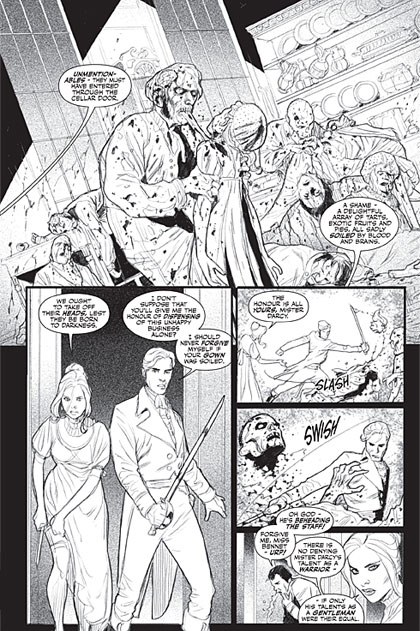
The "Pride and Prejudice and Zombies" graphic novel is adapted by Tony Lee and illustrated by Cliff Richards. Originally written by Jane Austin and Seth Grahame-Smith, I cannot comment on how well the story translated from text to comic, but I can comment on the final comic product. The graphic novel is hilarious. Imagine that ever slow part of “Pride and Prejudice” is changed by adding zombies. The whole Collins-Charlotte episode is improved by the minister’s wife is slowly decaying into the undead. Instead of a stuffy battle of words between Lady Catherine and Lizzy, it is a battle to the death with swords. There is never a moment that I wished there were not zombie hordes roaming England. The Bennet sisters are greatly improved with their newfound zombie fighting skills. The excessive violence is what Jane Austin needed in her original. The art was well done, with unique shading that reflected the darkness of the world and the characters in this new version. I must say that overall "Pride and Prejudice and Zombies" is a vast improvement.

"The Zombie Survival Guide: Recorded Attacks" is written by Max Brooks, the zombie expert who brought the world "World War Z" and "The Zombie Survival Guide." “The Recorded Attacks" is a well thought out addition to the mythos that Max Brooks had created. Spanning from prehistory to modern day and the outbreak that caused World War Z, the presence of Zombie’s in the world is clear. The story telling is fresh and a nice blend of myth, plausible history, and zombie-tastic fun. Avatar Press takes care of the illustrations, which are plenty gruesome and just realistic enough that at times I want to turn my head away. The story telling and images work well together to create an interesting tale.

So, if Zombie is on the menu, instead of a hack and slash Zombie IV film, try one of these comics. They will not disappoint.

Sharpening her Machete to fight undead hordes,
J.R. West the Raccoon

Sunday, July 4, 2010

American Mythology

For the special 4th of July post, I want to wish my fellow Americans Happy "Independence Day” (Happy "Forth of July" to everybody else). This day is one of my top holidays, it's no Halloween, but it's a good one. I love my country, and I am proud to say I'm a patriot. I believe in the core doctrine of the land and salute my flag. I am not an "'Amurka' is spelled F-R-E-E-D-O-M" patriot, but we can't all be. I want to take this moment to look at what America has given the world in terms of mythology. As a ridiculously young country, most of our mythology is stolen, borrowed or adapted. As such, purely American myths are few and far between, but as the years go by they grow in number. Our oldest myths belong to the west and the spirit of exploration. In fact these myths are so a part of our culture that they are typically forgotten. I'm talking about Tall Tales.

Elementary students hear about the exploits of Paul Bunyan and Babe the Blue Ox, John Henry, Johnny Appleseed, and Pecos Bill. Unfortunately, when asked about these figures later without a small bit of prompting they typically forget many of them. The region that you are from does influence which of these tall tale heroes you are most familiar with. In the Midwest Paul Bunyan is all the rage, his statue is all over Wisconsin. The Michigan vs. Michigan state football game winner gets a Paul Bunyan trophy. The Wisconsin vs. Minnesota game winner gets Paul Bunyan’s axe. As a Lumberjack his story is intertwined with the history of the region. Pecos Bill is a cowboy through and through and is the reason for the Lone Star of Texas. John Henry proved that the American dream is stronger than any machine as he drove steel for the railroads. Johnny Appleseed is so ingrained in the American mind that even the Girl Scouts have a song about him that they sing before meals from time to time. Johnny also has the distinction of being a real man whose life has been remember through myth. There are many other American men (and women) of legend. They continue to shape our modern mythology (e.g. “Steel” of DC comics is a modern take on John Henry).

So on this 4th of July, this day of Independence in America, take a moment to think of those mythic heroes who embody the ideals of this country.

Enjoying the holiday,
J.R. West the Raccoon

Thursday, June 10, 2010

September Issue: Calling for Art

Announcement:

Dante's Heart (www.dantesheart.com) will release its long-awaited fourth issue in early September, 2010. There will be a section devoted to trickster figures, as well as a richness of other work.

We are currently seeking art -- all media are welcome, but we will publish digitally online -- both for the issue's cover and interior. Art focused on trickster figures is welcome, but we will also consider anything relevant to fairytale, myth, folklore, fantasy, or the moment of wonder.

Please spread the word! Interested artists should contact me or submit work at editors@dantesheart.com.

Daniel Fusch, Ph.D
Editor, Dante's Heart
editors@dantesheart.com

Wednesday, May 5, 2010

Music and Fantasy

Nightfall
Quietly it crept in
And changed us all

-Blind Guardian

When contemplating fantasy music it is often the instrumental pieces, like those heard in the new Lord of the Rings Trilogy that come to mind. However fantasy has had a long and comfortable home in Heavy Metal. Many Metal artists are nerds, the coolest nerds ever, but never-the-less nerds. The Metallica song "Things That Should Not Be" was inspired by H.P. Lovecraft's "Old Ones". Led Zeppelin also gave a fantasy twist to much of their music, with a number of songs based on the Lord of The Rings (i.e. "Over the Hills and Far Away", "Misty Mountain Hop", "The Battle of Evermore," and "Ramble On"). While many thrash metal, heavy metal, and general metal artists will have a song here or there about the fantasy world, there is one type of metal that is based primarily on fantasy. Power metal is inspired by the world of the fantastic.

According to metal-archives.com, there are over 5000 power metal bands in the world. Power metal is a subgenre of heavy metal that combines traditional and speed metal elements, and is often more symphonic in nature. Along with a similar music style, power metal songs tend to share the same theme, fantasy and magic. Elvenking takes not only their name from the fantastic, but their songs include those same elements. Elves, dragons, kingdoms, and magic all appear in power metal songs. For example Evenking's “The Perpetual Knot” uses language reminiscent of highly magical days of Viking days of yore:
"Walking the trails of the perpetual knot
Search for the fibres,
the dwelling light net of Wyrd
Roaming souls on branch of Mother Earth"

Dragonland, while also conjuring old English settings, delves right into fantasy in their song “Majesty of the Mithril Mountains”:
"The time of wonders has come
The Dragons soaring high."


If Viking movies and novels are up your alley, or you just want something which brings you back to the magic of old, Power metal is the way to go.

Rocking it out with Elves,
J.R. West the Raccoon

Friday, April 16, 2010

Post-Apocalyptic Mythology: A Brief Introduction

This is the way the world ends
Not with a bang but a whimper.
—T.S. Eliot, "The Hollow Men" (1925)

Humanity has long had an obsession with death, from stories of the undead to quests for immortality. The only seemingly sure thing, death, has plagued the human consciousness. However, the death of the individual is not the only death that Humans worry about. Like creation myth, many cultures have their own end of the world mythology. The Christian faith has revelations which speak of devastating war and destruction, where as the Mayans have the world ending in different cycles with different methods. Story tellers have imagined into existence millions of ways to end the world. But the world's end is not the end of the story.

With the world over, the logical question is “what's next?” The issue of the post-apocalyptic world has its’ own set of mythologies. Some myths are quite old belonging to ancient cultures. For example, Christian Revelations puts the post apocalyptic world in a paradise. Modern writers, more often than not, do not share that cheery end of the world. As varied as the ways the world dies, are the ways humans handle what's left. They can escape to space or underground, evolve to fit the new world or an imagination’s worth of other possibilities. These myths are in some ways more compelling than the end of the world scenario that spawned them.

If this is the way the world ends, then what happens next?

Looking beyond the end,
J.R West the Raccoon

Tuesday, March 23, 2010

A Cure for Exhaustion

Tonight the editor of Dante's Heart is rummaging the house to find a cure for exhaustion. He remembers having seen it before, a tiny little quartz bottle with a cork stopper, an heirloom from his great-grandmother. He remembers the liquid inside sounds like the humming of bees when you shake up the bottle.

Monday, March 8, 2010

Long Ago Far Away

Dear readers,

I have been delighted to find a few clips on youtube (here is one below) of a television series I grew up with, Long Ago Far Away. This series of animated fairytales (using every medium from line drawing to stop animation) was often introduced or narrated by James Earl Jones of Darth Vader fame.


This wonderful series of fairy tales was a delight of my childhood. Definitely take a look at this clip of "Janko Raven" - you will be enchanted!

Does anyone know, by any chance, where recordings of "Long Ago Far Away" can be located/purchased? My machete-hunting through the wild ferns of Ebay has not turned up much....

Daniel
Editor, Dante's Heart

Monday, February 22, 2010

The Other Side of the Mirror

Hatter M: The Looking Glass Wars by Frank Beddor with Liz Cavalier and art by Ben Templesmith is a graphic novel based on a series of books with the same name. It is a reversal of the standard Alice in Wonderland. This Alice is a Wonderland princess lost in our mundane world. The characterization of the titular Hatter is spectacular as a royal guard of Wonderland appearing to be the definition of mad in our linear world. However, with his narration as a guide, he is easy to relate to. Additionally, the use of the art style and color in Templesmith's illustrations adds a new depth to the story, particularly to the characters. Beddor takes a familiar story and creates an intriguing and witty reversal.

The role of the hatter is much expanded from the original story. Instead of running a mad tea party this Hatter is Princess Alice's personal guard, trying to find her in a world that is far from the fantastic world he is used to. He replaces Alice as the focus and proves to be a brilliant character. His remarks at times are completely non-sequitur but appropriate in tone. Even his hat is more than a decoration; but instead is a bladed weapon he is well trained in using. It is a thrill to take the adventure with him.

The comic takes care to show visually the difference between those characters with ties to Wonderland and those who are terribly mundane. The hatter is draped in blue tones, colorful, but melancholy. Children who still imagine Wonderland are wrapped in bright colors and fanciful shapes. Adults not trapped by the lackluster of the normal world are colored while the rest are blue-gray, dull and lifeless. Very rarely are hard lines drawn; fuzzy curves dominate the art. Crisp definite boundaries are avoided; making the world feel dreamlike, as if the Hatter cannot accept our world as reality.

Hatter M: The Looking Glass War is a refreshing take on the classical tale. The artistic choices are brilliant and reversing Alice's role makes an interesting variation. Finally, the use of the Hatter as the protagonist caps this lovely comic. I give it a 4 out of 5.

On the wrong side of the Rabbit Hole,
J.R. West the Raccoon

Tuesday, February 2, 2010

Congratulations to our Art Editor and Editor-in-Chief

I would like to take this opportunity to congratulate two of the staff members on the addition to their family. I wish them all the happiness in the world and send all my love to their new little girl, River.

With Love,
J.R. West

Sunday, December 6, 2009

Anita Blake: Excelling in multiple forms


Anita Blake: Vampire Hunter's Guilty Pleasures and Laughing Corpse by Laurell K. Hamilton convert cleanly from book to graphic novel. This is due to the conversational nature of the story which matches the common comic book style. Additionally, the comic illustrator Brett Booth took care to match Hamilton's colorful description. The Anita Blake Vampire Hunter series is possibly the most accurate translation from comic to novel.

In both novels, Guilty Pleasures and Laughing Corpse Anita Blake narrates, her voice is a casual inner monologue which doesn't edit for the reader. This style almost exactly matches the style in the square narration boxes of comics. Her interior thought are highly reminiscent of Spiderman and Deadpool. They cleanly translate into the narration of a comic. It was almost as if Hamilton knew her novel was going to become a comic. In addition, to the voice of the narrator, Hamilton gives ample description of her world. Her illustrative description is almost enough for a sketch artist. The exact skin tone, hair type and color, body shape and size, and over all body language is covered in high detail. The illustrator is given a clear guide for each character. Booth takes the description and flawless converts it into images.

It was a thrill to both read the comic and novel version of the two stories, Guilty Pleasures and Laughing Corpse. I would recommend reading one version if you like the other.

Always looking for good comics
JR West the Raccoon

Wednesday, December 2, 2009

Petsalad: The art of coin cutting

Time flies.... For weeks I have wanted to share with you all my latest discoveries in the wonderful world of art, but work has kept me up lately as we all prepare ourselves for the Christmas period. I still just have a little time but I had to share with you this shop named: Petsalad.
I must admit it was, at first, not the work which caught my eye, but a small description of the shop showing at the top of the page. It said: "What Rob does when he's not playing banjo". Well, you can understand this made me very curious.


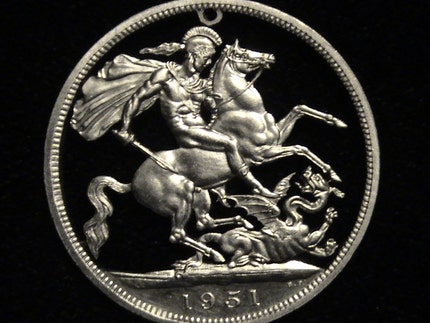
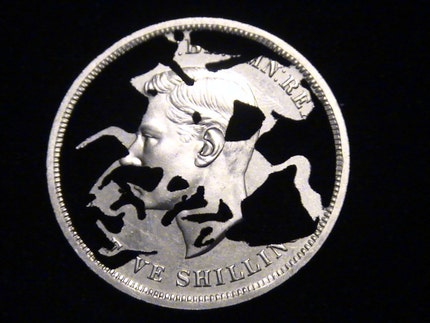
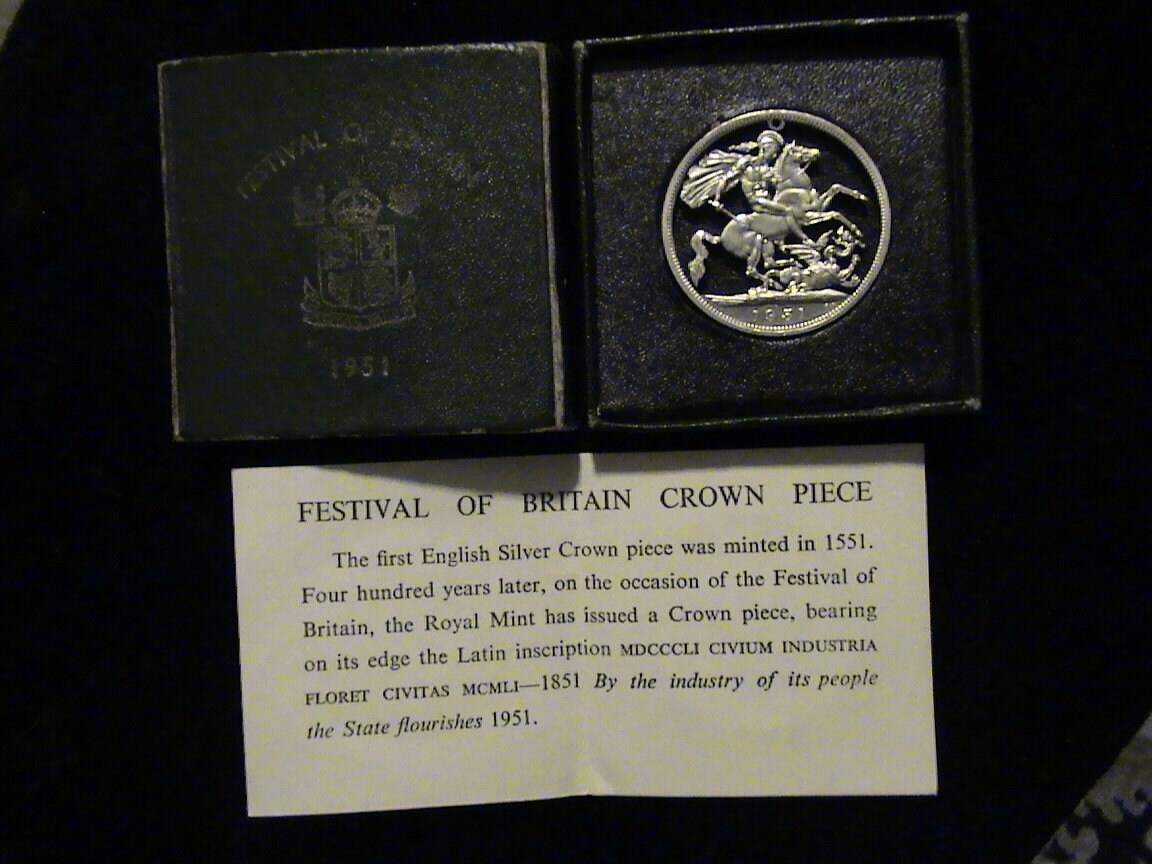
When I took a better look at Rob's shop I realized that the pendants I saw were actually coins. It was the first time in my life I came in contact with the art of cutting coins and I was absolutley blown away by the detail and beauty of these little pieces of art.
Though all these coins are beauties, the coin featuring St. George is the most stunning of all. It is hard to belief that these pendants are made with nothing more then a jewelers saw. No electricity or whatsoever is used during the process.


So, now you know what Rob does when he is not playing banjo....